
Earn your Bachelor of Applied Health Science - Paramedic degree
From first response to advanced clinical practice, today’s paramedics are highly skilled practitioners and frontline decision-makers shaping the future of out-of-hospital healthcare across emergency and community settings. The Bachelor of Applied Health Science – Paramedic (BAHSc-P) is a comprehensive four-year degree program designed to prepare practitioners across the full continuum of pre-hospital healthcare.
Embedded within the BAHSc-P Degree is a two-year Primary Care Paramedic Diploma, providing students with an initial entry-to-practice credential and a seamless pathway toward advanced practice and degree completion.
Already a practicing PCP or ACP?
Medicine Hat College remains committed to supporting practicing Primary Care Paramedics (PCP) and Advanced Care Paramedics (ACP) seeking to advance their education.
Dedicated degree pathways for active practitioners are currently under development in alignment with the multi-year implementation of the new BAHSc-P framework.
Applications for these pathways are not open at this time.
Please note: The BAHSc-P degree is a competitive-entry program, and meeting the minimum grade average does not guarantee admission. The application deadline for this program is May 3, 2027.
High School
Overall average of at least 60% and a minimum mark of 50% in:
- ELA 30-1
- Biology 30
- Math 30-1 or Math 30-2
- One 30-level, 5 credit subject (Chemistry 30 is recommended)
Mature Student
Overall average of at least 60% and a minimum mark of 50% in:
- ELA 30-1
- Biology 30
- Math 30-1 or Math 30-2
Transfer Route
Students require ELA 30-1, Biology 30 and Math 30-1 or 30-2 however, previous post-secondary coursework can be considered.
Year One
Semester 1
- BIOL 275 - Basic Human Anatomy and Physiology I
- IDST 100 - Introductory Communications for Helping Professionals
- PSYC 2XX - Any 200-level PSYC course
- PARA 111 - Foundations of Paramedicine
- PARA 112 - Pre-Hospital Care: Theory & Management I
Semester 2
- BIOL 277 - Basic Human Anatomy & Physiology II
- ANTH 213 - Contemporary Indigenous Issues in Canada
- PARA 121 - Advanced Communications in Paramedicine
- PARA 122 - Pre-Hospital Care: Theory & Management II
- PARA 123 - Comprehensive Health Assessment
Semester 3
- PARA 135 - Primary Care Practicum I
Year Two
Semester 4
- PARA 241 - Pharmacotherapeutics
- PARA 242 - Pre-Hospital Care: Theory & Management III
- PARA 243 - Special Populations I
- PARA 244 - Mental Health Intervention
Semester 5
- PARA 255 - Primary Care Practicum II
Credential: Primary Care Paramedic Diploma
Year Three
Semester 6
- STAT 333 - Statistics for Healthcare
- PARA 311 - Paramedicine & Health Care Systems
- PARA 312 - Pre-Hospital Care: Theory & Management IV
- PARA 313 - Advanced Trauma
- PARA 314 - Community Paramedicine
Semester 7
- PHIL 313 - Bioethics
- PARA 321 - Collaborative Leadership in Paramedicine
- PARA 322 - Advanced Medicine
- PARA 323 - Special Populations II
- PARA 324 - Applied Research in Paramedicine
Semester 8
- PARA 335 - Advanced Care Practicum I
Year Four
Semester 9
- PARA 445 - Advanced Care Practicum II
Credential: Advanced Care Paramedic (transcript notation)
Semester 10
- PARA 456 - Inquiry in Paramedicine
Credential: Bachelor of Applied Health Science - Paramedic Degree
There is a high demand for paramedics who are employed by public and private ambulance services provincially, nationally and internationally. Paramedics also work in a variety of industrial and community-based emergency health settings.
Additional Information
A career in paramedicine requires a high level of physical and emotional well-being.
Students must be able to demonstrate the physical capabilities to safely maneuver stretchers and equipment. For example, to meet industry benchmarks (such as the F.A.R.E. test), paramedics must demonstrate the strength and endurance to perform:
- Progressive crate lifts and front carries of up to 48 kg (105 lbs)
- Bilateral side carries of up to 9 kg (20 lbs) per hand
- Simultaneous kneeling with forward trunk flexion for extended periods, including a two-minute hold
These activities may occur within timed, high-intensity circuits.
Alongside these physical demands, students must be emotionally prepared to manage acute trauma and dynamic, high-stress environments.
In the event of illness or injury, students must present a medical clearance certificate prior to returning to the program.
Professional Driving Improvement Course
Students will complete the IAPD Emergency Medical Vehicle PDIC course in Year 2 – Semester 5.
Prior certifications are not recognized for exemption. Active participation and successful completion of all components and evaluations are required for all students.
Uniforms
Students will be required to buy uniforms and appropriate foot wear. Uniforms will be ordered in the first semester of the program. Students will also be responsible for purchasing a pen light, stethoscope, trauma shears, trauma glasses, and an emergency vest.
Electronic Charting
Students will be required to purchase a Wi-Fi-enabled device (e.g. laptop or tablet) as well as additional software (e.g. CompTracker) for ongoing competency tracking and patient-care reports.
Further information will be provided during the first semester.
The BAHSc-P program operates under a holistic, adaptive educational framework focused on clinical reasoning, diagnostic depth, and real-world problem-solving.
Starting in the first year, learning is treated as an active partnership where students are exposed to high-fidelity simulation alongside clinical and ambulance practice. The curriculum balances core technical preparation including physical assessment, pharmacology, and patient management, with vital non-technical competencies such as interpersonal communications, interprofessional collaboration, and psychological resilience.
Prospective students should be mature, adaptable, and highly motivated to navigate the physical and mental demands of shift work, emergency care, and critical patient management. Paramedics must think independently, exercise sound clinical judgment, and communicate effectively within dynamic, interprofessional healthcare teams.
Beyond core clinical competencies, this program instills the confidence, professional decorum, and situational leadership required to perform effectively across both routine and high-acuity environments.
Graduates enter a high-demand profession with diverse career paths in public, private, and industrial emergency services across provincial, national, and international sectors, as well as evolving roles in community-based healthcare.
View the Program Learning Outcomes
Program Philosophy
The Medicine Hat College Bachelor of Applied Health Science - Paramedic program operates under a holistic, adaptive educational framework focused on clinical reasoning, diagnostic depth, and real-world problem-solving. The curriculum establishes education as a collaborative partnership built on mutual transparency and absolute trust, where students serve as active, accountable co-creators of their learning who take ownership of their personal wellness and professional growth.
To prepare graduates for the complexities of modern paramedicine, the program embraces "safe failure" as a necessary path to resilience, utilizing hands-on simulation and immediate, supportive debriefs to transform errors into meaningful insights. Faculty act as approachable, student-centered mentors who fluidly adjust their teaching styles to meet diverse learning needs, sharing their own experiences to provide an authentic, transparent blueprint for navigating adversity and building a robust professional identity.
MHC paramedic students provide thousands of hours of frontline care annually, supporting communities across Alberta. Through strategic practicum placements, our learners integrate into emergency services province-wide, delivering life-saving interventions in both urban and rural regions. This provincial reach ensures that even the most underserved areas benefit from the latest evidence-based practices taught at MHC.
By bridging the gap between classroom theory and real-world emergency response, our students don’t just learn, they serve. Their engagement reduces the burden on local healthcare systems and reinforces the “chain of survival” for patients throughout the province.
Please Note: It is the student’s financial responsibility to arrange and fund all travel and accommodations required for the duration of the practicum.
- Expenses: These costs are not included in tuition or program fees.
- Planning: Students must ensure they have the necessary resources to reach their assigned site and maintain residency in that area for the duration of the placement.
Years 1 & 2
Students enter directly into the BAHSc-P program. Upon successful completion of Year 2, students may earn the Primary Care Paramedic Diploma and are eligible to challenge the Canadian Organization of Paramedic Regulators (COPR) examination at the PCP level and enter the workforce.
Years 3 & 4
Students progress into advanced paramedic studies and degree completion. Following completion of the final advanced care practicum in Year 4, students receive an Advanced Care Paramedic Transcript Notation. This confirms eligibility to challenge the COPR examination at the ACP level.
Upon successful completion of the final Work-Integrated Learning (WIL) capstone project, students graduate with the Bachelor of Applied Health Science – Paramedic Degree.
Please speak with an ACADEMIC ADVISOR for more information.
The program is fully approved by the Alberta College of Paramedics (ACoP) and prepares graduates to challenge the national entry-to-practice registration examinations administered by the Canadian Organization of Paramedic Regulators (COPR) at both thePrimary Care Paramedic (PCP) level and the Advanced Care Paramedic (ACP) level.
The curriculum is built upon the eight core areas of the Canadian Paramedic Competence Framework (CPCF):
- Professionalism
- Communication
- Collaboration
- Learning and Adapting
- Health
- Advocacy
- Leadership
- Care
The program also aligns directly with the National Occupational Standard for Paramedics (NOSPs) and the Pan-Canadian Essential Regulatory Requirements (PERRs).
Frequently Asked Questions
The short answer is yes. However, graduates must still register with the professional regulatory body in the specific province where they intend to practice.
While national labour mobility frameworks facilitate reciprocal licensing, graduates who complete their education outside of that jurisdiction may encounter additional provincial registration requirements, jurisprudence exams, or other assessments as part of the credential transfer process.
Historically, transfer credit was granted for PARA 100; however, this practice ultimately proved to be a disservice to students.
To ensure students establish the necessary foundational knowledge required for long-term success in the program and their national exam, transfer credit is no longer accepted for this course.
No. As an approved program, we require students to complete an online professional driving course—the International Association of Professional Drivers Emergency Medical Vehicle Professional Driver Improvement Course (IAPD EMV PDIC). Practical, behind-the-wheel driver training remains the responsibility of the employer.
While this arrangement may seem atypical to some students, the decision was driven by key institutional factors, including prohibitive costs, high insurance and liability risks, and rapid skill degradation without ongoing field operation.
This is a difficult question to answer definitively, particularly as our practicum structure transitions alongside the new curriculum.
Practicum placements vary in duration, depending on the specific program level and practicum phase. While every placement has a designated baseline of scheduled tours and hours, completions are competency-based rather than strictly time-based.
Consequently, a practicum may be extended based on individual student progression, clinical exposure, or lower call volumes to ensure all required patient encounters and clinical competencies are thoroughly met.
The simple answer is no - we are strictly a paramedic education program, not a firefighting academy.
That said, the fire service is exceptionally competitive, and holding a PCP or ACP credential significantly strengthens an applicant’s portfolio. Furthermore, municipalities such as Lethbridge and Red Deer currently operate integrated fire-EMS models. In these services, dual-trained members function in both capacities, responding as firefighters while also providing advanced prehospital emergency care on the ambulance.
Distinguishing between a Primary Care Paramedic (PCP) and an Advanced Care Paramedic (ACP) can be confusing, especially since PCPs were formerly known as EMTs and ACPs were simply called Paramedics.
The key difference lies in their scope of practice and level of responsibility: PCPs provide Basic Life Support (BLS), while ACPs deliver Advanced Life Support (ALS). ACPs perform all the duties of a PCP, along with advanced clinical interventions.
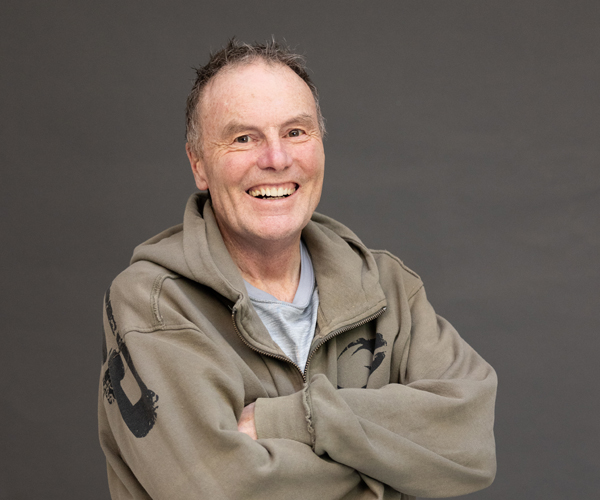
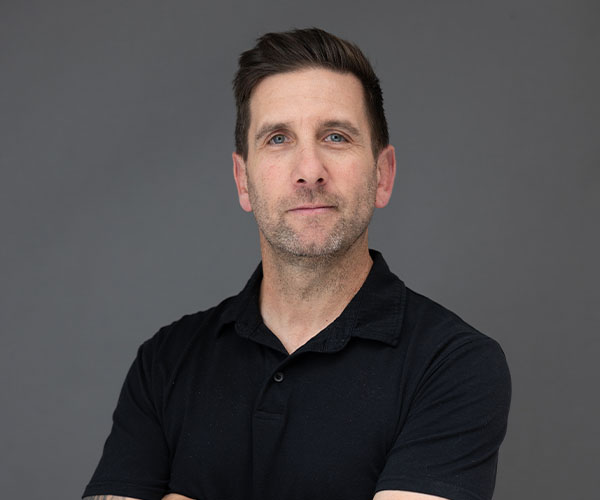
Meet the Faculty

Applied Degree
Duration:4 years
Intake:Fall (Application deadline May 3, 2027)
School:Yuill School of Health & Community Services
Campus:Medicine Hat
Apply Today Apply for MHC programs
Talk to an Advisor Book an appointment here
Program Planning Guides Build your schedule
Cost Estimator MHC can provide an estimate based on program tuition, student fees, books and additional expenses.
Post-Admission Document Requirements
Immunization Information