Finding Connection in Contrast: Inside the 2026 Art & Design Grad Show
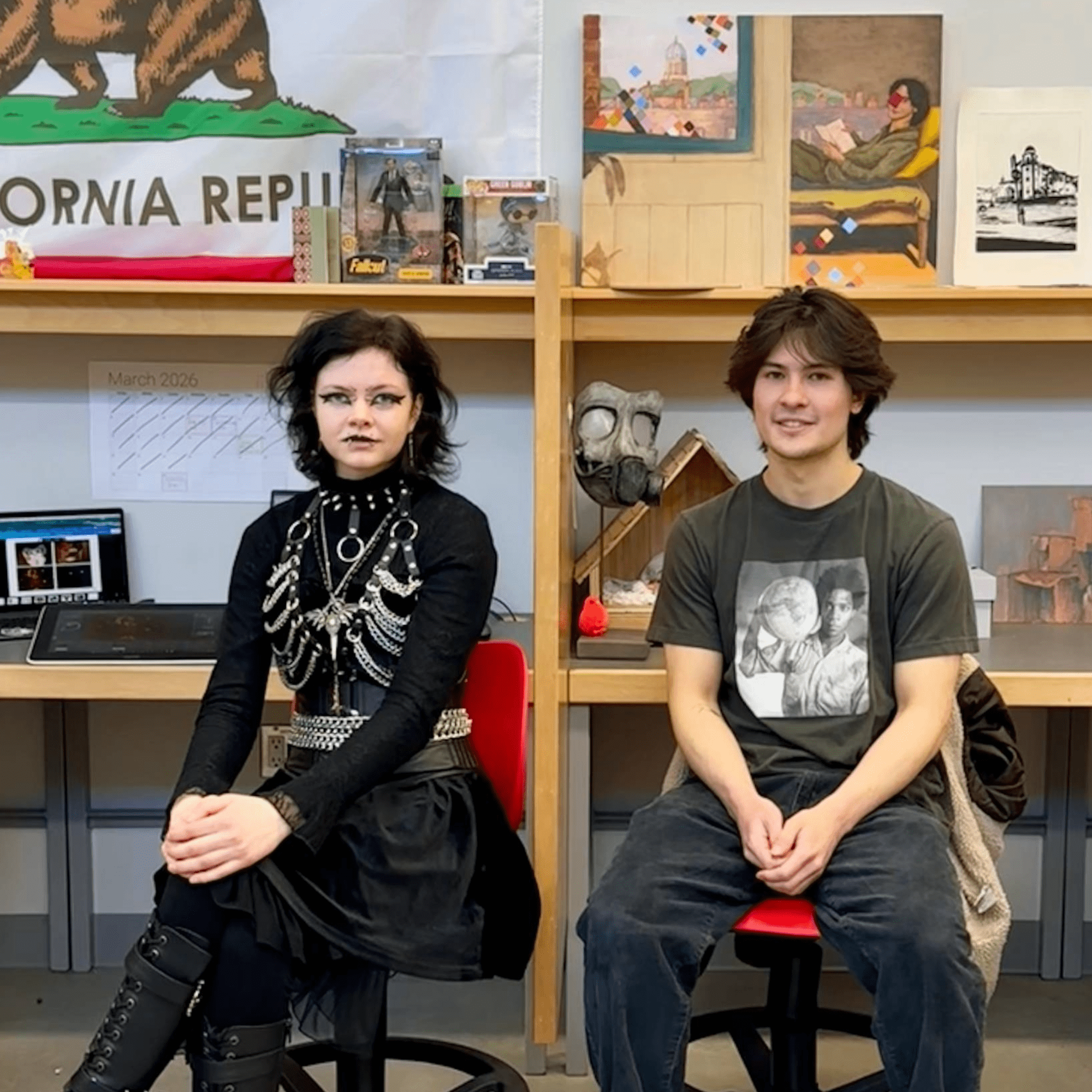 Art & Design students, Alannah-Mae Medeiros sat left and Zachary Fischer on right, sitting at their cubical desks.
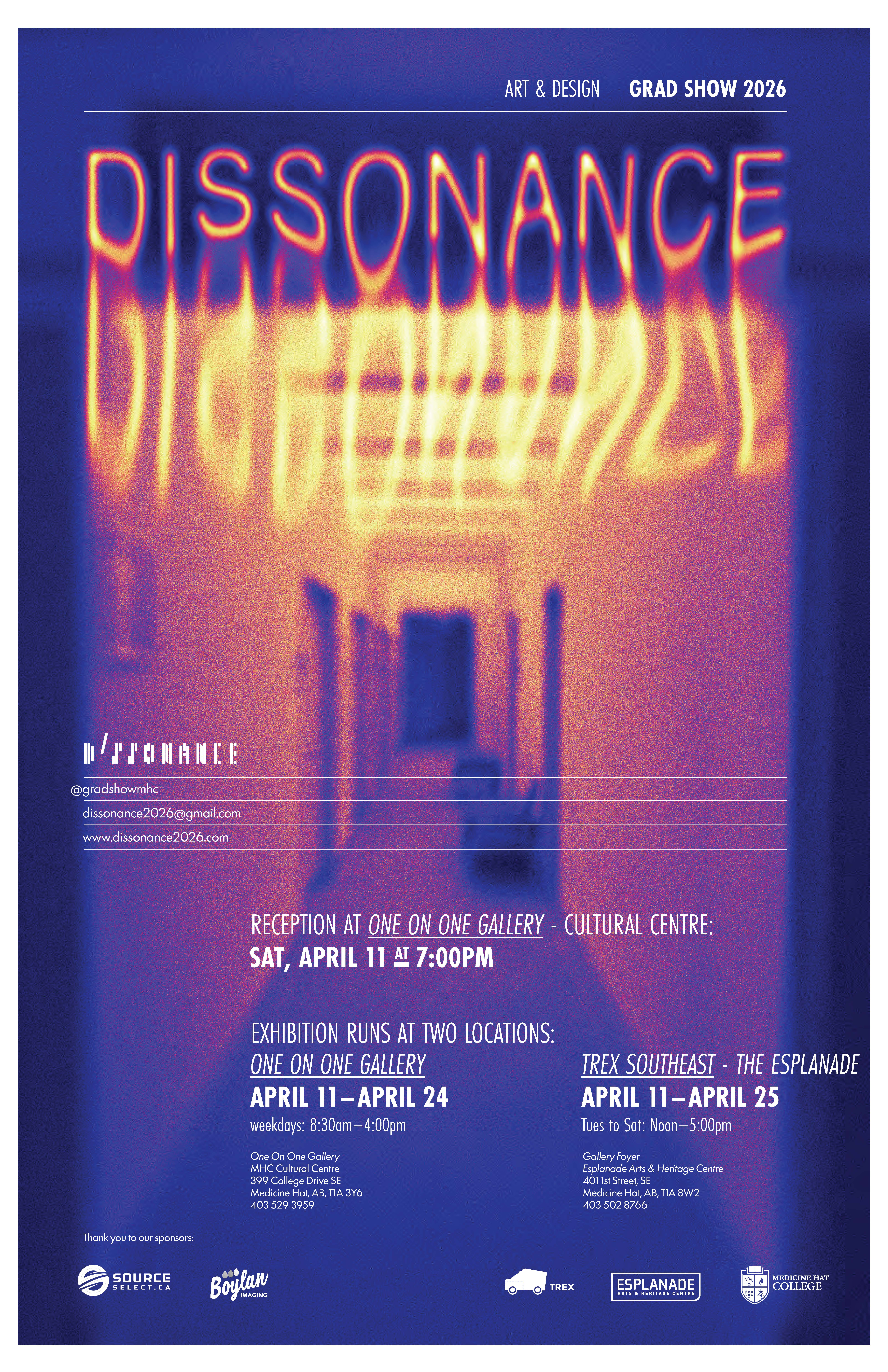
In the Art & Design program’s 2026 Grad Show, Dissonance, difference isn’t something to resolve, but instead something to explore. The exhibition brings together contrasting artistic voices and approaches, asking students to navigate complexity, collaboration, and creative tension in a real‑world exhibition context.
Art & Design students in their final semester come together as a group to create the annual Grad Show. Students develop a body of work that relates to the theme of the grad show, learn to market themselves, and design the show from the ground up in just three months.
We spoke with graduating students, Alannah-Mae R Medeiros and Zachary Fischer, about what it meant to build the show from the initial idea to the final exhibition. Dissonance became more than an exhibition, it was a hands-on learning experience that shaped their creative direction and reinforced the value of individual expression balanced with collective responsibility.
Q: Can you explain what the Art & Design grad show is, and what this year’s theme represents?
Alannah-Mae: We ended up on Dissonance because we wanted something that encapsulates everyone. We come from different backgrounds, work in different mediums and nothing perfectly matches, which really is the point.
The theme also reflects where we are right now. We’re embracing change because we're graduating, leaving, and embracing the chaos that life brings. Everything is somewhat interconnected even if it looks completely different from one piece to another, they're still somewhat connected, but you just have to look for those clues in between.
Zachary: Dissonance means a clash in combining elements, and it's supposed to be a metaphor for the different perspectives of the students in the grad show coming together to form a cohesive group
Q: This year, the show is also being held at the Esplanade. How do you think that impacts the community’s perception of the program or the work being shown?
Alannah-Mae: It's a beautiful way to portray the art side of things. A chance to put ourselves out into the community. To have others see, that there are people out there who are expressing something and sharing it with the world.
Zachary: Having the show across two galleries, may be confusing to some people, but that fits with our theme, ‘Dissonance’, a little bit.
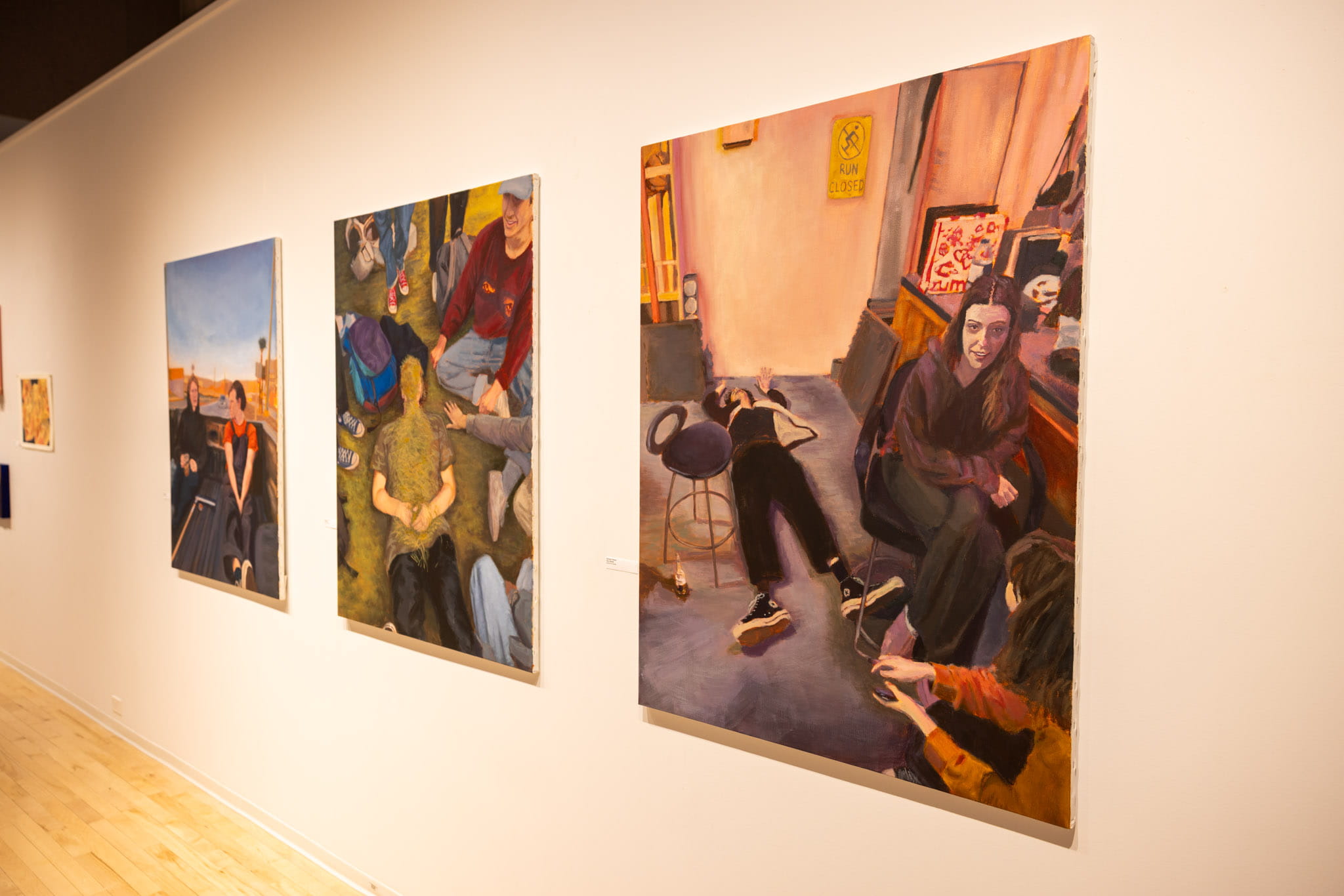 Zachary Fischer three large paintings on display at the One-on-One Gallery.
Q. How have you incorporated what you’ve learnt throughout your program into the grad show?
Alannah-Mae: My path into the program was a little different. I came from a course in New Zealand, where it's much more games, digitally and coding focused. Coming here gave me a change to go back to my roots (focusing on making art). I’ve learnt that there is so much flexibility here, a variety of classes ranging from sculpture to traditional fine arts. It’s something I’ve never really tackled before and wanted to try.
Zachary: I’ve learnt so many skills from the graphic design classes that I've used in helping to market the grad show. I’m using my knowledge and skills of painting classes to work on my grad projects.
Q. How has this experience changed or influenced your view of receptions, exhibitions, or group work?
Alannah-Mae: This experience has showed me how much effort goes into putting on a show - something I hadn’t fully understood before. There are so many tiny things to consider, including the wrangling of people and making sure everyone's on the same page.
It's an amazing chance to show us what the real world is like. It’s not always going to be just sitting down and drawing, painting or doing what you want, you will be having to work with other businesses, in groups, and understand the public view.
Zachary: It's given me a clearer picture of how much work goes into putting on an exhibition, and how difficult it can be to make important decisions, and all agree as a team on what needs to be done.
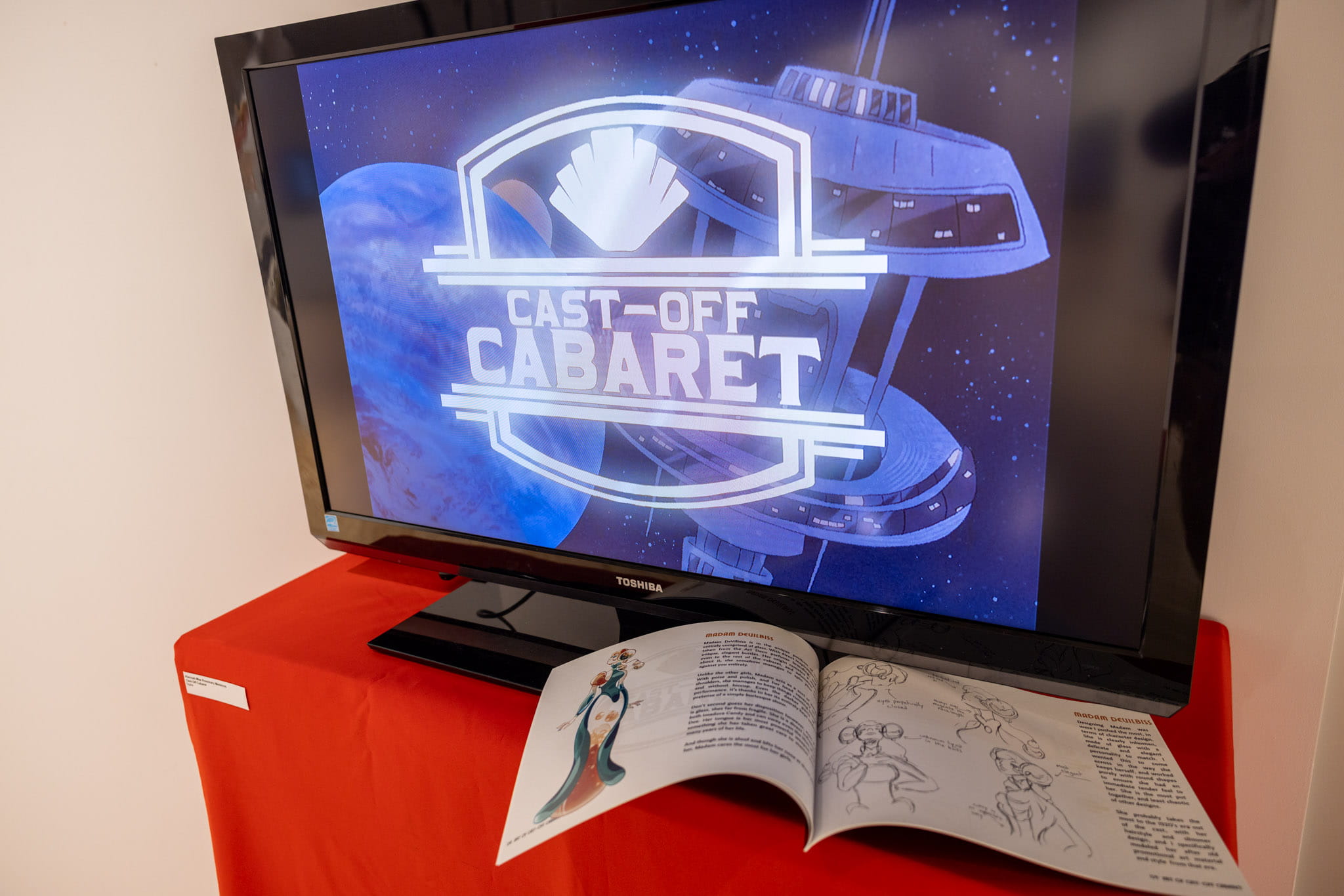 Alannah-Mae R Medeiros animation displayed on TV scene with a book filled with her written process.
Q. In what ways has your experience at MHC influenced your future goals in art or design?
Alannah-Mae: While this may not be my final destination, it’s given me so much perspective. I want to be someone who is never done learning.
I’ve been so blessed to have this opportunity to come here, meet new people who are like-minded and experience so many things (new approaches to art and design). I'm really happy that I came here.
Zachary: It's pushed me to try bigger things and get out of my comfort zone. It's made me more driven to pursue art. My time at MHC has made me want to further my art education. It's made me want to do art a lot more and improve my skills.
Interested in the challenge of creating a grad show of your worn? Explore the Art & Design program at www.mhc.ab.ca.
interested in an creative career? check out
Art & Design
Learn moreContact:
To book a media interview, please email
media@mhc.ab.ca