
Teaching & Learning
The Teaching and Learning Research Award acknowledges original research in or for the classroom (individually or at a team-level) that is field-specific, uses new technologies, and/or develops original pedagogical techniques.
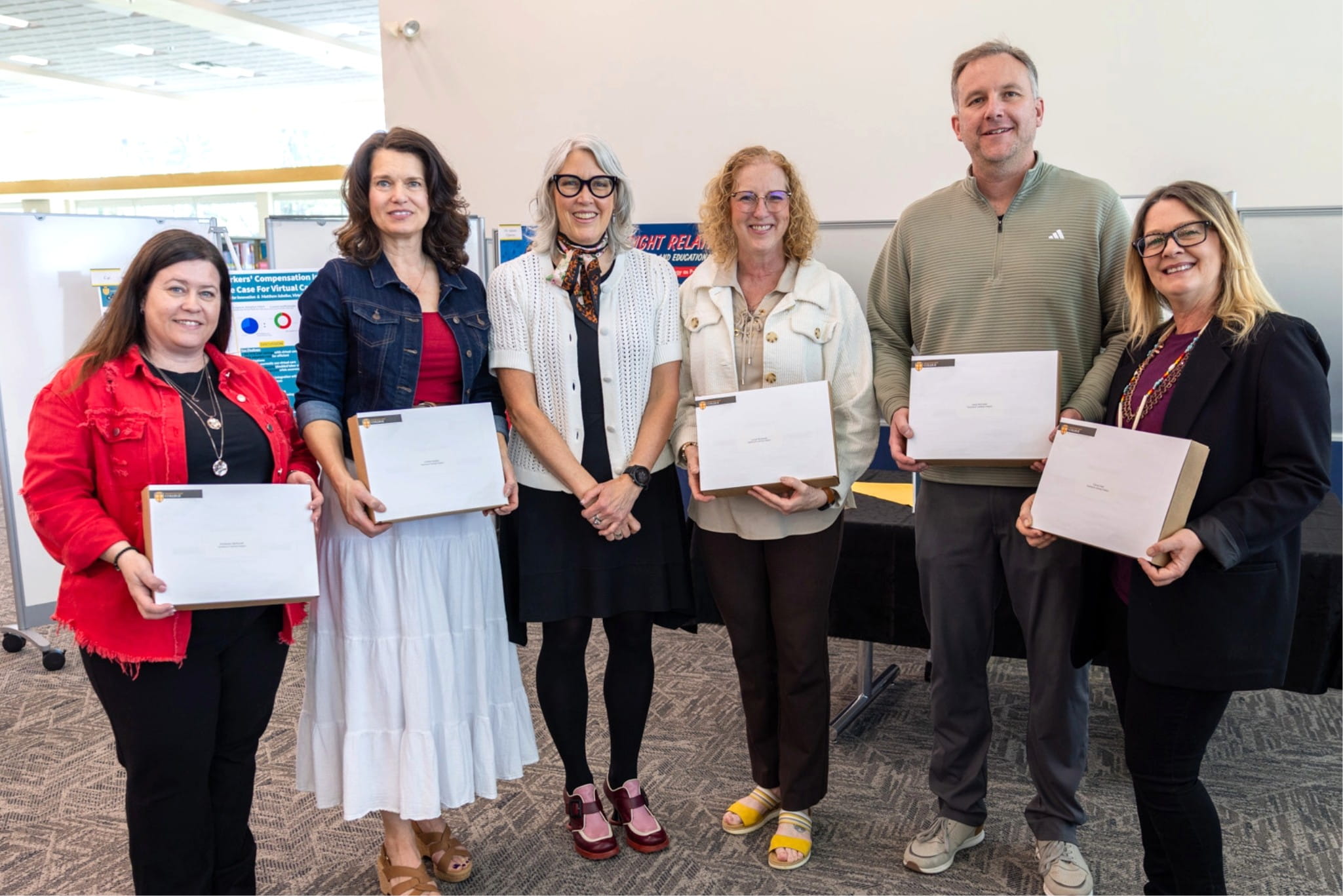
(From left to right) Kimberley McDowall, Colleen Andjelic, Nancy Brown, Lorelei Boschman, Jason McLester, Christy Gust
Teaching and Learning Award Recipients: (Education Team) Colleen Andjelic, Lorelei Boschman, Christy Gust, Kimberley McDowall, Jason McLester, Stacey Miner
Project: Presentations by the Education Team at the World Federation of Associations of Teacher Education Conference (WFATE)
This nomination recognizes full-time Education faculty for presenting at the World Federation of Associations of Teacher Education (WFATE) Conference, in Tarragona, Spain, in May 2025. WFATE is a prestigious international conference that brings together teacher educators from around the world to disseminate research, innovation, and impactful practices. Following a rigorous peer-review process, the Education Team was accepted to deliver three presentations.
Collaborative Innovation in Teacher Education: Co-Teaching and Pedagogical Practice in a Bachelor of Education Program, showcased an action-research-based, pedagogy course collaboratively developed to support innovative co-teaching structures. The shared model integrates high-impact teaching practices and themed instructional modules, responding directly to the needs of the education community.
Enhancing Pre-service Teacher Experience Through Collaborative Online International Learning (COIL): A Swedish-Canadian Student and Faculty Model, co-presented with a Swedish educator, highlighted intercultural connectedness through shared online coursework, dialogue, and projects to enrich global perspectives in teacher education.
From Day One to Certification: Designing an Intentional Pathway for Teacher Development, showcased intentional scaffolding throughout the degree of early classroom engagement, ongoing mentorship, weekly learning communities, and an evolving ePortfolio to cultivate skilled, reflective, career-ready teachers.
The Education Team’s commitment and dedication to share scholarly work internationally and their collaborative, comprehensive, and dedicated analysis of programmatic components and strengths is noteworthy. Their scholarly contributions advanced understandings about the Canadian education system, two collaborative models, and programmatic aspects that were purposely developed to build a strong education program and, likewise, emerging educators. MHC’s reputation for purposeful, collaborative, and rigorous academic work was clearly demonstrated.
Previous Teaching and Learning Research Award Winners
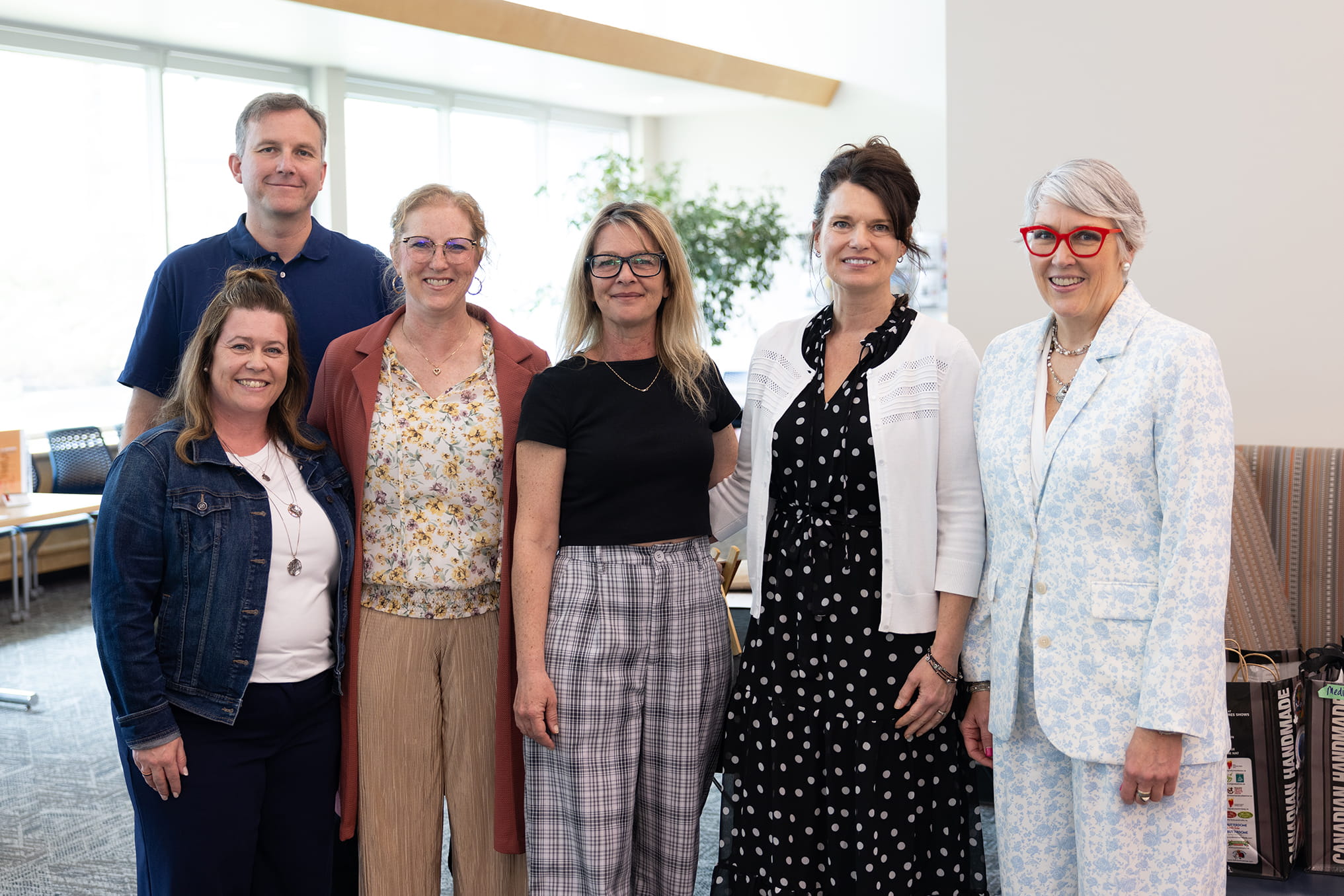 2024 Teaching and Learning Award: Lorelei Boschman, Christy Gust, Kim McDowall, Jason McLester, Colleen Andjelic | Taking Forward and Leaving Behind: What lessons can we draw from postsecondary student voice?
Taking forward and leaving behind: What lessons can we draw from the student voice? In Jacobsen, M. & Smith, C. (Eds.), Online Learning and Teaching from Kindergarten to Graduate School (pp. 355-385). Canadian Association for Teacher Education. Find the volume here.
When we, as instructors in a community-college education program, looked back on the past few years, we were cognizant of emergency pandemic shifts made by instructors and teachers. To ascertain the impact of these pandemic shifts on student learning, we studied the student voice utilizing two cycles of action-research methodology. In Cycle 1, we examined how the inclusion of pandemic-teaching shifts in the areas of pedagogy, content, and connection impacted student learning. Student voice was solicited by surveying first- through fourth-year education students in March 2021. Utilizing their responses, we adapted our Fall 2021 courses, incorporating some of the student-identified impactful pandemic teaching strategies. In Cycle 2, we examined similar concepts but focused on the impact on student learning from the continued inclusion of pandemic shifts in the areas of pedagogy, content, and connection, and what teaching and learning adaptations arising from our pandemic shifts should be carried forward and which should be left behind. To gain student voice on these concepts, we re-surveyed our students in November 2021. After thematically analyzing the student voice regarding the impact of each adaptation, we discovered that students wanted us to take forward: (a) alternative pedagogical approaches, (b) strategies to create and maintain meaningful connections, and (c) mindful adjustments to course content. They wanted us to leave behind: (a) excessive screen time, (b) extraneous workloads, and (c) reliance on lecture-centered learning. As we enter a post-pandemic era, we are cognizant that new paradigms can and should be woven into a reimagining of education.