

Disciplinary Research Award
The Disciplinary Research Award may be awarded for a range of research projects, inclusive of applied research. Submissions may also be interdisciplinary in method or scope. All research must be original.
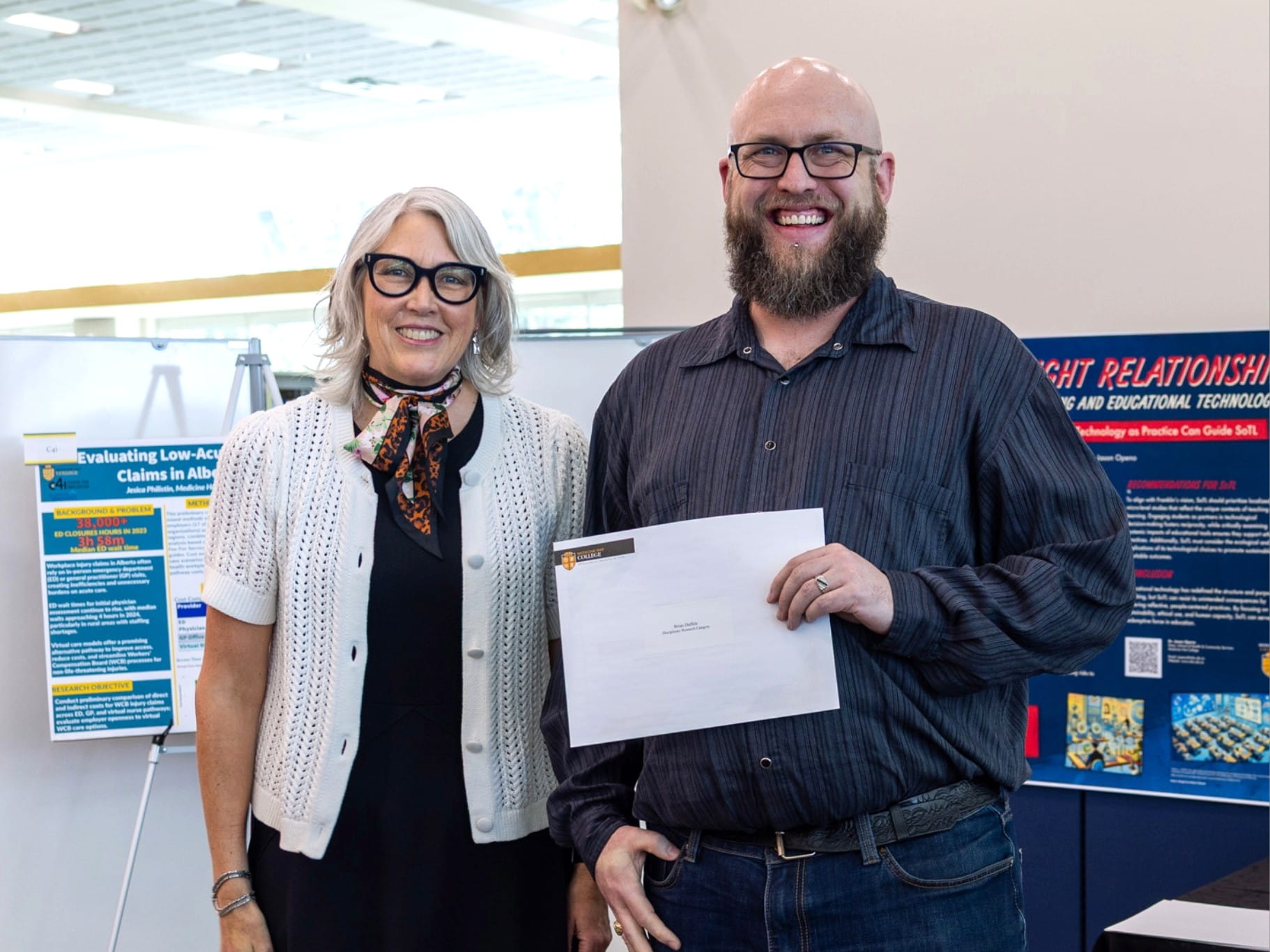
Disciplinary Research Award Recipient: Brian Duffels
Project: Investigating the Psychological and Behavioral Consequences of Emotion Induction: An Evolutionary Approach
This project is built upon the belief that emotions evolved for a reason. For example, the experience of anger is accompanied by endorphins, adrenaline, and muscle tension that serve to facilitate aggressive situations while disgust causes people to scrunch their faces up in such a way as to prevent exposure to noxious stimuli. The literature on the subject presents a confusing array of conclusions. It is the underlying hypothesis of this lab that different experimental methods lead to qualitatively different emotional experiences. That is to say that an experimental design that makes one feel happy in the moment (e.g., winning a prize for completing a task) is likely inducing a different psychological state than a design that asks you to remember your happiest memory. Put another way, the evolutionary value of experiencing happiness in the moment is likely fundamentally different than the evolutionary value of remembering happiness from the past, or observing happiness in others. As such, it is predicted that, by inducing any given emotion a variety of ways, and observing the effect of the emotional state on established psychological phenomena (e.g., attention, memory, judgement, etc.), qualitative and quantitative behavioural differences should be observable, thus challenging and contributing the growing body of research on this subject.
Over the past few years, a small team of student volunteers has worked on a project showing how remembered and empathic sadness and disgust influence executive and spatial attention. Interesting patterns are emerging - disgust is felt greater when watching others in disgusting situations than when remembering disgusting events, but sadness is felt greater when watching others. However, in certain conditions, the observed effects are greatest when the experienced emotion is reported as less extreme. Clearly, whatever is driving these effects is not a single linear dimension of emotion!
In the upcoming years, students will be employing electroencephalography, near-infrared spectroscopy, and virtual reality to further explore the unique psychological and physiological fingerprint of each emotion while continuing to ask the question: What are emotions for?
Previous Disciplinary Research Award Winners
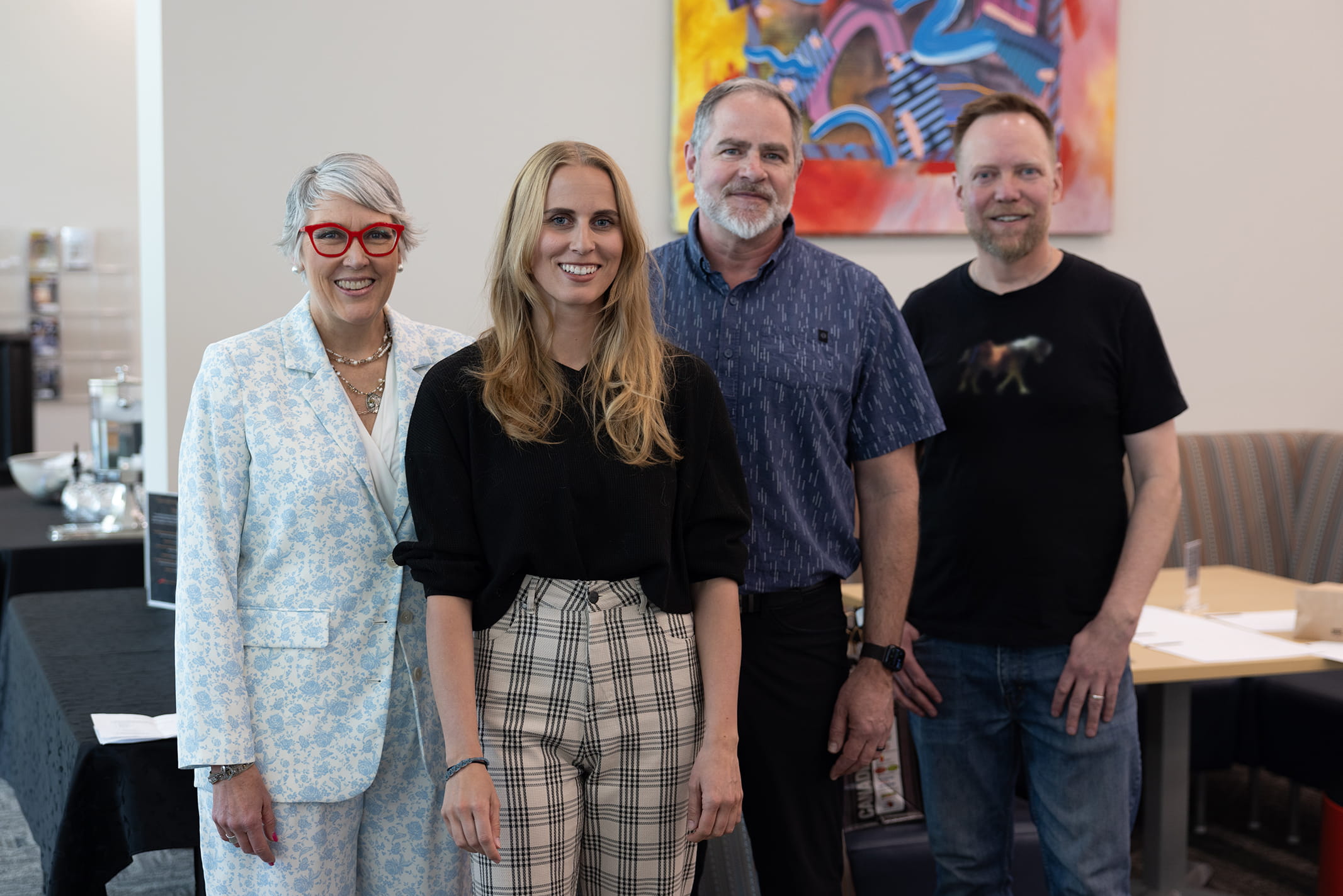
2024 Disciplinary Research Award: Brent Smith, Jim Kuehn, Elly Heise and Steve Letkeman | Urban Trees Research & ‘Pulse of the Urban Forest’ multi-sensory exhibition
The Medicine Hat College's "Urban Trees" project is an interdisciplinary applied research project, funded by an impact climate grant through Colleges and Institutes Canada. This initiative leverages data from soil sensors embedded in city trees to enhance their self-sustainability and resilience to drought. Spearheaded by Brent Smith, MSc., this project not only collects valuable data but also serves as an innovative exploration into the symbiotic potential between urban and rural environments.
The accompanying exhibition, co-curated by Jim Kuehn, MSc. MA, and Elly Heise, MFA, delves into the symbiotic relationship between culture and our ecosystem. In the captivating showcase titled "Pulse of the Urban Forest," local artists collaborate, examining the balance between individuals and their urban natural surroundings. The exhibition, weaving together art, scientific data, wellness, and technology, offers an immersive experience that ranges from multi-sensory digital art to traditional sculptures.
While the participating artists navigate a diverse array of human-nature connections, they are united in raising the question: how can we as humans improve our ongoing relationship to nature? Participating artists include Kennedy Chisholm, Elly Heise, Morgan Johnson, Jim Kuehn, Jenna Maertz, Tish Pahtayken, Karis Rabanes, and Erika Rouillard.
Through this exhibition, the convergence of art and science not only celebrates the achievements of the "Urban Trees" project but also challenges us to reflect on our role in fostering a more harmonious coexistence with the natural world.
Learn more about the exhibition and project Urban Trees Project Article