
Preparing Art & Design Students for the Future

While the Art & Design graduating class prepared to present their final exhibition, instructor Ian Richmond worked behind the scenes on a different kind of creative process. Alongside supporting the development of the work itself, he helped students think about how their ideas step out into the world.
His focus is on teaching how an exhibition communicates, how an audience moves through it, and what people take with them once they leave.
Q. What does the Art & Design grad show represent for the program, and how does this year’s show reflect student learning or growth?The grad show teaches lots of transferable skills. Learning how to work within a team, as well as figuring out how they work as individuals. Seeing that collectively they contribute a unique perspective; they all pick up different things from different classes and incorporate them into the grad show.
Q. This year’s show is also being held at the Esplanade. Why is that significant for both students and the wider community?
The faculty also have a show right now at the Esplanade, so it's going to be, I think, maybe a first time ever where we've got faculty work alongside student work.
It is a nice full circle that really showcases where students are and where they could be.
Q. What do experiences like this reception and group exhibition teach students about professional practice and collaboration?
They're taking away the ability to learn how to see eye to eye. To understand there could be differences in opinion and working styles, but they'll need to make it work. This is my eighth year doing this, and continuously there’s this moment where they take charge and do this more autonomously. I feel proud of the steps they’re moving in and how they’re putting those skills to use.
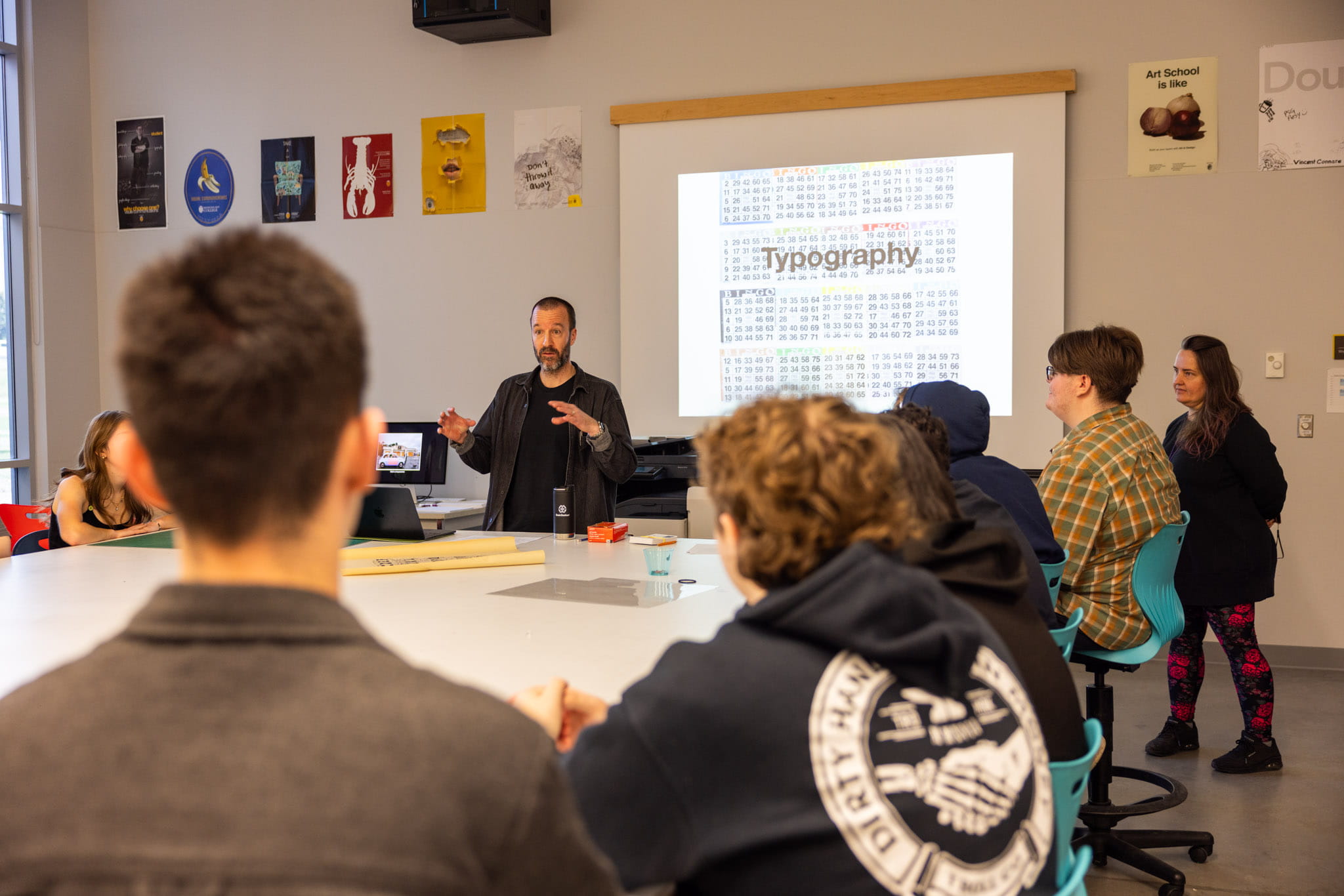
Q. In what ways do you feel this program prepares students for their future paths in art or design - professionally or creatively?This program requires accountability and self-management. The day‑to‑day, where they’re working alongside each other, supporting one another, giving feedback, critiquing, and simply being in the studio space, prepares them for work outside of college. If they miss class, they miss a lot.
There is growth as they work with the instructor, get feedback, and learn how to synthesize it all to come up with a solution that best fits their concept or their idea that they're working with.
I want to always make sure that when they leave, they're going to flourish. If their paths change, this element of being able to think critically, solve problems and figure things out, that's quite universal in nature and can be applied to anything.
As an instructor, Ian is always thinking ahead, ensuring students leave the program with transferable skills they can carry into their future careers. Through experiences like the grad show, students learn to collaborate, manage their time, think critically, and adapt to new challenges. These skills, paired with creative confidence and strong presentation abilities, help ensure graduates are prepared not just for their first opportunity, but for whatever paths lie ahead.
If you’re looking for a program that builds more than creative talent, the Art & Design program offers students the skills, confidence, and experience to thrive in whatever comes next. Learn more about how our students are prepared for the future at www.mhc.ab.ca.
interested in an creative career? check out