
Prototypes inspire local sustainable thinking
Conversations of forward thinking filled the room as viewers gathered to engage with the forward-thinking poster presentations of second year Sustainable Innovation students After months of development, students from the SUST 212 Design Thinking course presented projects ranging from a water-saving campaign to improved recycling access, and solutions addressing fast fashion, demonstrating that sustainability is achievable for all.
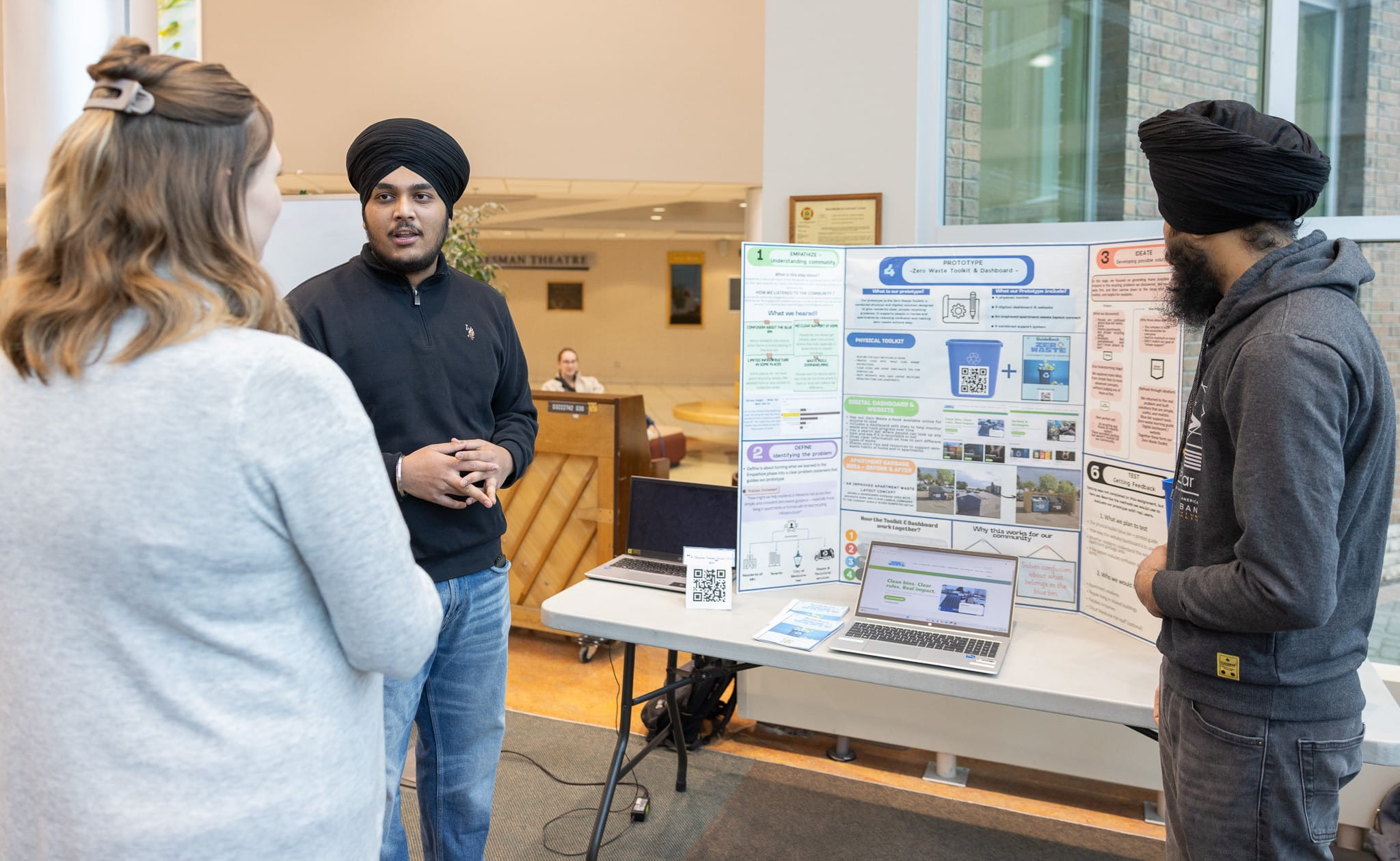 Sustainability Innovation students presenting their work.
As their final project, Design Thinking students were tasked with identifying a local sustainable challenge aligned with the City of Medicine Hat’s Environmental Framework. Students collected and analyzed feedback, then refined their findings by prototyping a potential solution. Each project aligned with community needs, local environmental priorities, and the broader goals of sustainable development within Medicine Hat.
This project challenges students to think like an innovator. By first understanding existing systems or structure, learners focus on making improvements using practical measures focused in community needs. These projects are presented as proposals rather than final solutions, emphasizing the importance of clarifying the needs, testing assumptions, and iterating ideas over time.
Brandon Robinson, Sustainable Innovation instructor and coordinator, says, “Students are pushed to look for outliers, barriers, and lived experience so they can design solutions that are more equitable and realistic. They learn how to reframe broad problems into focused, solvable problem statements; a professional skill that applies to government, industry, non-profits, and entrepreneurship.”
The work of Maria Solorzano and David Page explored an issue that affects much of the Medicine Hat community: fast fashion and its environmental and social impacts, including pollution, excessive waste, child labour, and the effects of microplastics. By looking to the downtown business communities, the students identified consumer behavior and industry practices as key drivers of fast fashion culture.
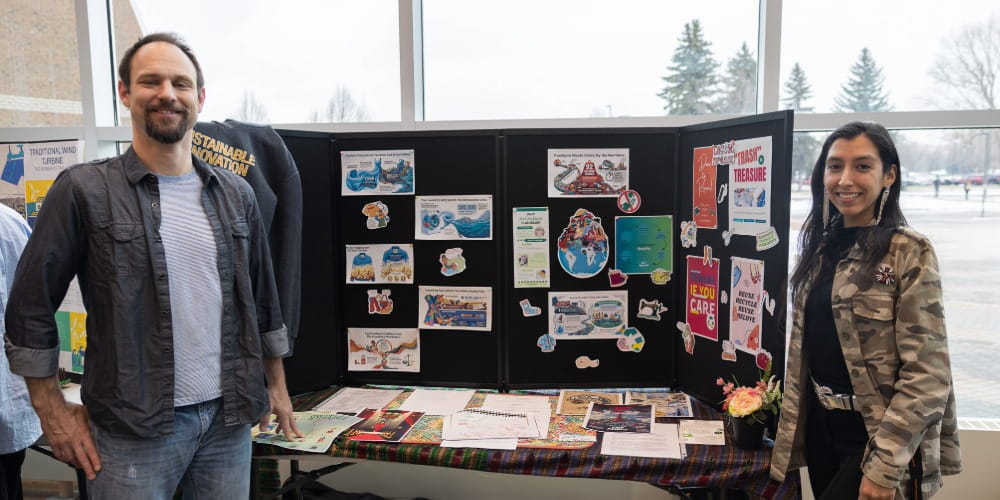 Sustainable Innovation students, Maria Solorzano and David Page standing beside their poster presentation.
“People want things fast, easy, convenient, and we're not going to change that,” says second year Sustainable Innovation student, Page. "What we can change is showing them, with just a few simple tips, how do-it-yourself and thrift alternatives are cheaper, easier, and can give them a greater sense of confidence and personal identity.”
For Solorzano, the project also influenced her future direction, “This opened my vision for what I want to do after graduating,” she says. “I really love this kind of initiative and contributing to the conversation around sustainability. This program boosted my creativity and pushed me to think more deeply about my own passions.”
The final project inspired not only the students, but Robinson as well. “This project is rewarding because of the range and originality of the prototypes and because I learn alongside the students,” he says. “I don’t walk into these projects with all the answers, and that’s part of the point: students see that real sustainability work is collaborative and exploratory.”
Students demonstrated that innovation is a process, one rooted in learning and listening, and responding to real issues. These projects represent meaningful steps towards solutions that make sustainability feel within reach for the community.
For more information about the Sustainable Innovation program visit, www.mhc.ab.ca.