
Earn your Bachelor of Applied Health Science - Paramedic degree
From first response to advanced clinical practice, today’s paramedics are highly skilled practitioners and frontline decision-makers shaping the future of out-of-hospital healthcare across emergency and community settings. The Bachelor of Applied Health Science – Paramedic (BAHSc-P) is a comprehensive four-year degree program designed to prepare practitioners across the full continuum of pre-hospital healthcare.
Embedded within the BAHSc-P Degree is a two-year Primary Care Paramedic Diploma, providing students with an initial entry-to-practice credential and a seamless pathway toward advanced practice and degree completion.
Please Note: The BAHSc-P Degree is a competitive entry program. Meeting minimum published admission averages does not guarantee admission.
Already a practicing PCP or ACP?
Medicine Hat College remains committed to supporting practicing Primary Care Paramedics (PCP) and Advanced Care Paramedics (ACP) seeking to advance their education.
Dedicated degree pathways for active practitioners are currently under development in alignment with the multi-year implementation of the new BAHSc-P framework.
Applications for these pathways are not open at this time.
Please note: the application deadline for this program is May 3, 2027.
High School
Overall average of at least 60% and a minimum mark of 50% in:
- ELA 30-1
- Biology 30
- Math 30-1 or Math 30-2
- One 30-level, 5 credit subject (Chemistry 30 is recommended)
Mature Student
Overall average of at least 60% and a minimum mark of 50% in:
- ELA 30-1
- Biology 30
- Math 30-1 or Math 30-2
Transfer Route
Students require ELA 30-1, Biology 30 and Math 30-1 or 30-2 however, previous post-secondary coursework can be considered.
Year One
Semester 1
- BIOL 275 - Basic Human Anatomy and Physiology I
- IDST 100 - Introductory Communications for Helping Professionals
- PSYC 201 - Introduction to Psychology II – Social Science
- PARA 111 - Foundations of Paramedicine
- PARA 112 - Pre-Hospital Care: Theory & Management I
Semester 2
- BIOL 277 - Basic Human Anatomy & Physiology II
- ANTH 213 - Contemporary Indigenous Issues in Canada
- PARA 121 - Advanced Communications in Paramedicine
- PARA 122 - Pre-Hospital Care: Theory & Management II
- PARA 123 - Comprehensive Health Assessment
Semester 3
- PARA 135 - Primary Care Practicum I
Year Two
Semester 4
- PSYC 385 - Psychopathology
- PHSL 200 - Pathophysiology
- PARA 241 - Pharmacotherapeutics
- PARA 242 - Pre-Hospital Care: Theory & Management III
- PARA 243 - Special Populations I
Semester 5
- PARA 255 - Primary Care Practicum II
Credential: Primary Care Paramedic Diploma
Year Three
Semester 6
- STAT 333 - Statistics for Healthcare
- PARA 311 - Paramedicine & Health Care Systems
- PARA 312 - Pre-Hospital Care: Theory & Management IV
- PARA 313 - Advanced Trauma
- PARA 314 - Community Paramedicine
Semester 7
- PHIL 313 - Bioethics
- PARA 321 - Collaborative Leadership in Paramedicine
- PARA 322 - Advanced Medicine
- PARA 323 - Special Populations II
- PARA 324 - Applied Research in Paramedicine
Semester 8
- PARA 335 - Advanced Care Practicum I
Year Four
Semester 9
- PARA 445 - Advanced Care Practicum II
Credential: Advanced Care Paramedic (transcript notation)
Semester 10
- PARA 456 - Inquiry in Paramedicine
Credential: Bachelor of Applied Health Science - Paramedic Degree
There is a high demand for paramedics who are employed by public and private ambulance services provincially, nationally and internationally. Paramedics also work in a variety of industrial and community-based emergency health settings.
Additional Information
The BAHSc-P program operates under a holistic, adaptive educational framework focused on clinical reasoning, diagnostic depth, and real-world problem-solving.
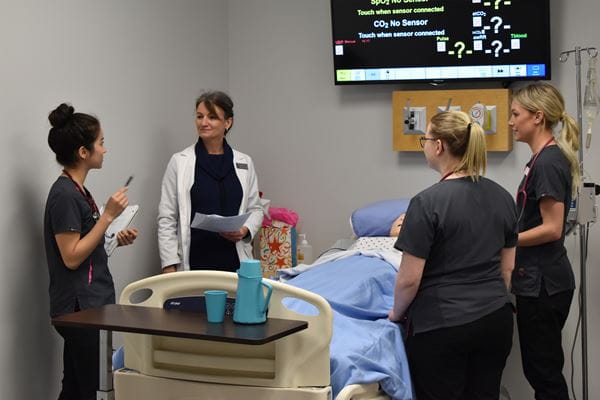
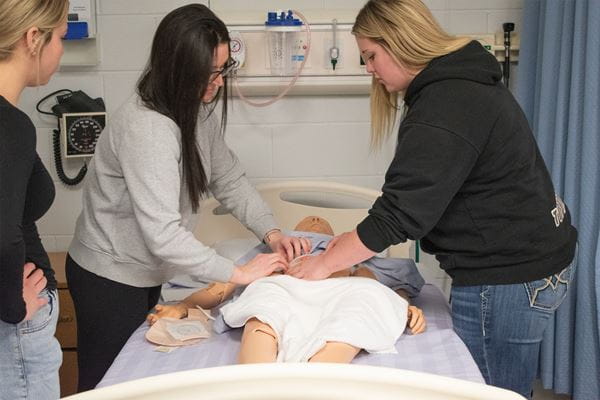
Starting in the first year, learning is treated as an active partnership where students are exposed to high-fidelity simulation alongside clinical and ambulance practice. The curriculum balances core technical preparation including physical assessment, pharmacology, and patient management, with vital non-technical competencies such as interpersonal communications, interprofessional collaboration, and psychological resilience.
Prospective students should be mature, adaptable, and highly motivated to navigate the physical and mental demands of shift work, emergency care, and critical patient management. Paramedics must think independently, exercise sound clinical judgment, and communicate effectively within dynamic, interprofessional healthcare teams.
Beyond core clinical competencies, this program instills the confidence, professional decorum, and situational leadership required to perform effectively across both routine and high-acuity environments.
Graduates enter a high-demand profession with diverse career paths in public, private, and industrial emergency services across provincial, national, and international sectors, as well as evolving roles in community-based healthcare.
Years 1 & 2
Students enter directly into the BAHSc-P program. Upon successful completion of Year 2, students may earn the Primary Care Paramedic Diploma andare eligible to challenge the Canadian Organization of Paramedic Regulators (COPR) examination at the PCP level and enter the workforce.
Years 3 & 4
Students progress into advanced paramedic studies and degree completion. Following completion of the final advanced care practicum in Year 4, students receive an Advanced Care Paramedic Transcript Notation. This confirms eligibility to challenge the COPR examination at the ACP level.
Upon successful completion of the final Work-Integrated Learning (WIL) capstone project, students graduate with the Bachelor of Applied Health Science – Paramedic Degree.
Please speak with an ACADEMIC ADVISOR for more information.
The program is fully approved by the Alberta College of Paramedics (ACoP) and prepares graduates to challenge the national entry-to-practice registration examinations administered by the Canadian Organization of Paramedic Regulators (COPR) at both thePrimary Care Paramedic (PCP) level and the Advanced Care Paramedic (ACP) level.
The curriculum is built upon the eight core areas of the Canadian Paramedic Competence Framework (CPCF):
- Professionalism
- Communication
- Collaboration
- Learning and Adapting
- Health
- Advocacy
- Leadership
- Care
The program also aligns directly with the National Occupational Standard for Paramedics (NOSPs) and the Pan-Canadian Essential Regulatory Requirements (PERRs).
After being admitted into the program, but before the documentation deadline outlined in the application letter, the following must be provided:
- A Fitness to Practice Declaration.
- A valid Class 5 driver’s license or GDL to meet driver training requirements.
- N95 mask fitting is a program requirement that can be scheduled and completed on campus before the first day of class.
- Submission of immunization documentation is required as a post-admission requirement for all health programs. Alberta Health Services (AHS) currently recommends immunizations for healthcare workers. However, individual clinical/fieldwork sites may require proof of specific immunizations and/or screening.
- A recent Police Information Check (within two months) prior to the first day of classes. Periodic police information checks may be required prior to practicum and work experience to maintain current status throughout the program and to comply with provincial laws. Students are obligated to inform the Program Coordinator immediately of any change in the status of their criminal record.
Registration Exams
For employment and professional licensure purposes, students may elect to challenge the Canadian Organization of Paramedic Regulators (COPR) entry-to-practice registration examinations at both practitioner levels:
- Primary Care Paramedic (PCP) upon completion of Year 2.
- Advanced Care Paramedic (ACP) following completion of Year 4 and receipt of the ACP transcript notation.
Challenging these examinations is not a requirement of Medicine Hat College nor the Alberta College of Paramedics to remain in good academic standing or fulfill institutional graduation requirements.
All costs related to COPR registration, travel, accommodation, and meals are the student's responsibility.
Further information regarding exam eligibility and schedules is available through COPR.
Fitness Requirements
A career in paramedicine requires a high level of physical and emotional well-being.
Students must be able to demonstrate the physical capabilities to safely maneuver stretchers and equipment. For example, to meet industry benchmarks (such as the F.A.R.E. test), paramedics must demonstrate the strength and endurance to perform:
- Progressive crate lifts and front carries of up to 48 kg (105 lbs)
- Bilateral side carries of up to 9 kg (20 lbs) per hand
- Simultaneous kneeling with forward trunk flexion for extended periods, including a two-minute hold
These activities may occur within timed, high-intensity circuits.
Alongside these physical demands, students must be emotionally prepared to manage acute trauma and dynamic, high-stress environments.
In the event of illness or injury, students must present a medical clearance certificate prior to returning to the program.
Professional Driving Improvement Course
Students will complete the IAPD Emergency Medical Vehicle PDIC course in Year 2 – Semester 5.
Prior certifications are not recognized for exemption. Active participation and successful completion of all components and evaluations are required for all students.
Uniforms
Students will be required to buy uniforms and appropriate foot wear. Uniforms will be ordered in the first semester of the program. Students will also be responsible for purchasing a pen light, stethoscope, trauma shears, trauma glasses, and an emergency vest.
Electronic Charting
Students will be required to purchase a Wi-Fi-enabled device (e.g. laptop or tablet) as well as additional software (e.g. CompTracker) for ongoing competency tracking and patient-care reports.
Further information will be provided during the first semester.
Meet the Faculty



Applied Degree
Duration:4 years
Intake:Fall (Application deadline May 3, 2027)
School:Yuill School of Health & Community Services
Campus:Medicine Hat
Apply Today Apply for MHC programs
Talk to an Advisor Book an appointment here
Program Planning Guides Build your schedule
Cost Estimator MHC can provide an estimate based on program tuition, student fees, books and additional expenses.
Post-Admission Document Requirements
Immunization Information